How does interdisciplinary research lead to the development of a sustainable material for the future?
At the eMatInnoHub, HTW Dresden’s existing electron beam technical center is being expanded into an interdisciplinary research facility, thereby establishing electron beam technology as a long-term component of the university’s portfolio of expertise. The research project focuses on the development of a sustainable, bio-based plastic with a biocide-free, antimicrobial surface. Six departments are pooling their diverse expertise for this purpose. Their work ranges from material development and testing to research on recyclability and potential applications, as well as knowledge transfer to the scientific community, industry, and society.
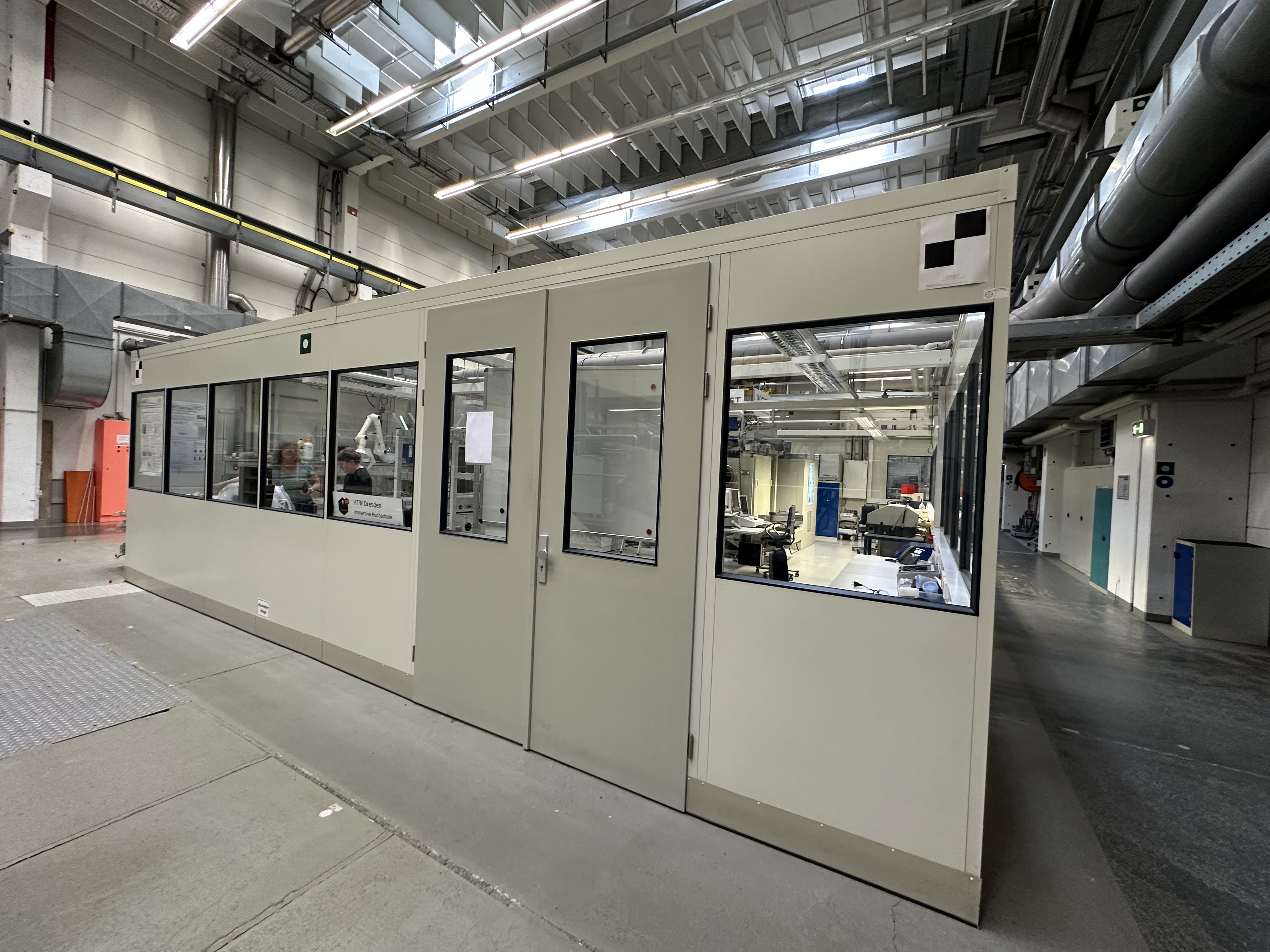
A technical college. Six disciplines. A space for new questions.
Der Forschungsraum des eMatInnoHub reicht weit über die Kerntechnologie des Elektronenstrahl-Technikum hinaus. Das dort modifizierte Material wird in den unterschiedlichen Fachbereichen untersucht – von dessen Eigenschaften über Anwendungsmöglichkeiten bis hin zur Rezyklierbarkeit. Durch die Zusammenarbeit von Fachbereichen mit unterschiedlichen Kompetenzen entstehen interdisziplinäre Räume der Kooperation. Dadurch können neue Forschungsfragen und Lösungsansätze entstehen. Die Fakultät Design ergänzt die naturwissenschaftlich-technische Forschung um gestalterische Perspektiven und entwickelt Formate, die wissenschaftliche Erkenntnisse verständlich und erfahrbar machenThe eMatInnoHub’s research scope extends far beyond the core technology of the Electron Beam Technical Center. The materials modified there are studied across various academic departments—from their properties and potential applications to their recyclability. Collaboration among departments with diverse areas of expertise creates interdisciplinary spaces for cooperation. This, in turn, can give rise to new research questions and approaches to solutions. The School of Design complements scientific and technical research with design perspectives and develops formats that make scientific findings understandable and tangible.
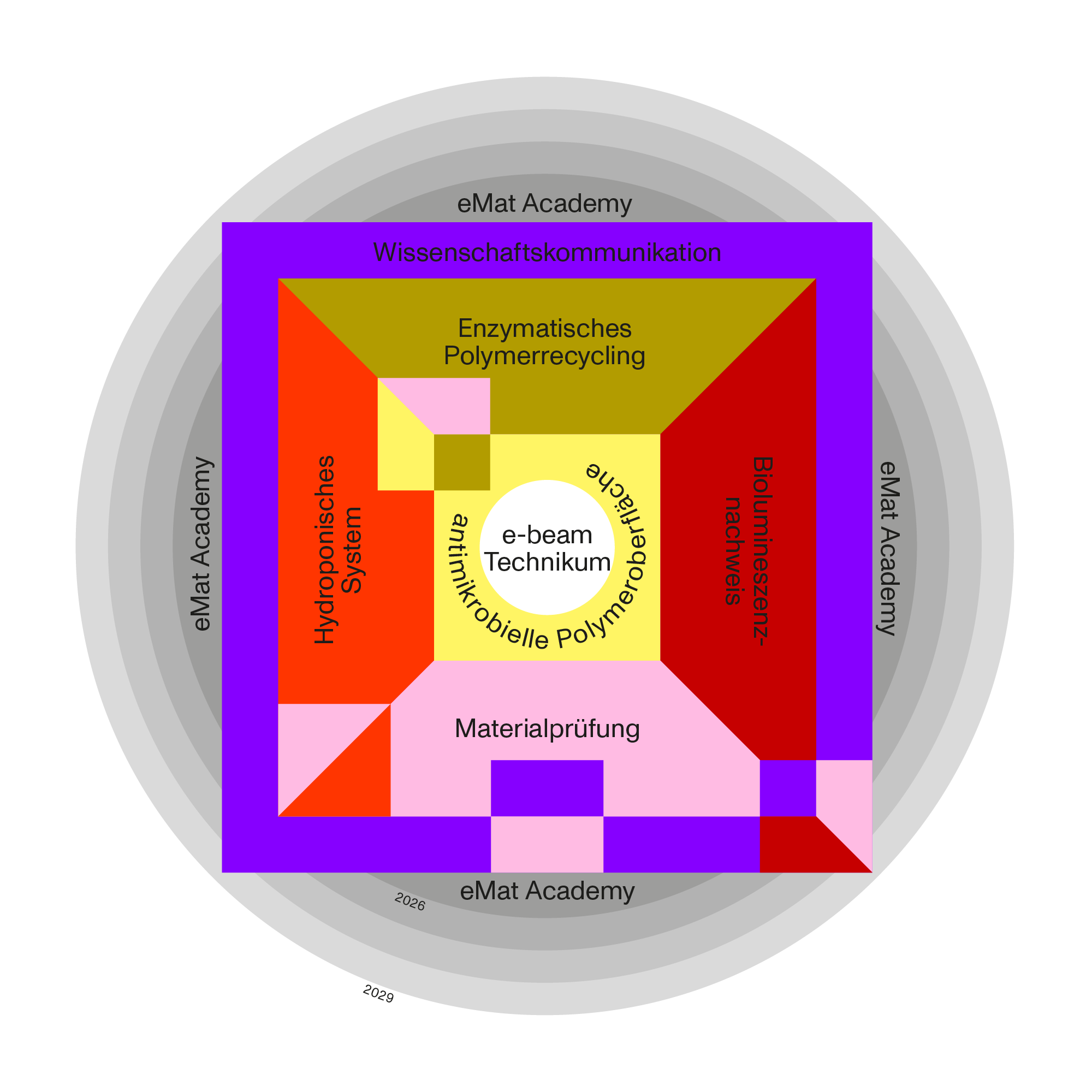

How can plastics be designed to be antimicrobial, durable, and recyclable all at the same time?

Can antimicrobial materials protect plants from pathogens without impairing their growth?

How can the invisible effects of antimicrobial surfaces be demonstrated and made understandable to users?

What new applications emerge when material properties and contexts of use are considered together?
How can insights gained from practical application be incorporated back into materials development?